A different approach when other treatments haven't worked.
Repetitive Transcranial Magnetic Stimulation (rTMS) is a treatment for depression and possibly other psychiatric disorders.
About
Repetitive Transcranial Magnetic Stimulation (rTMS) is a safe, non-invasive treatment for depression — including treatment-resistant depression.
It uses gentle magnetic pulses to stimulate the areas of the brain involved in mood regulation. No anaesthesia. No hospital stay required. Many people notice meaningful improvement within a few weeks.
How rTMS works
Before the treatment course begins some time will be spent stimulating the area of the brain that controls muscle movement in the hand opposite to the side of the brain on which rTMS will be given. The patient may feel small twitches in the hand during this procedure. It is not painful. This procedure is done to establish how high the machine intensity needs to be sent to affect the brain in an individual patient.
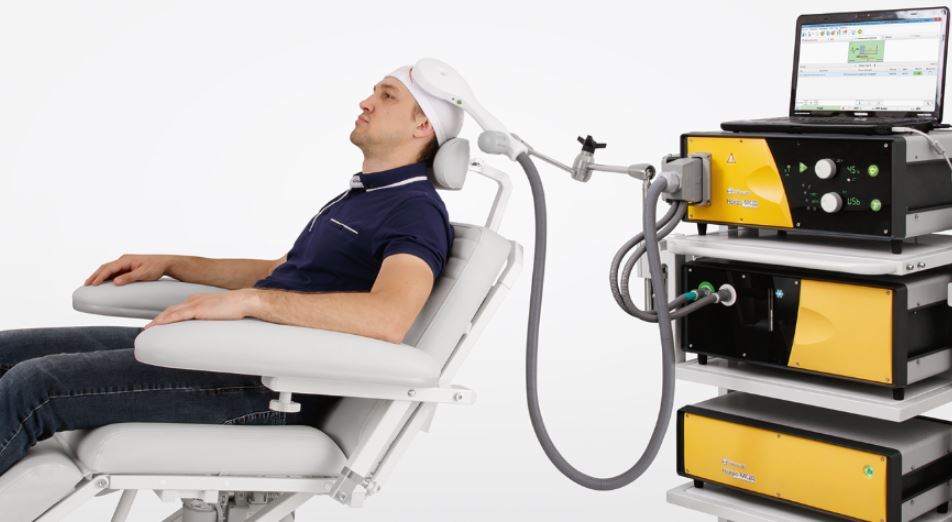
During treatment, the person sits comfortably in a chair while a magnetic coil is positioned against the scalp.
The device delivers targeted magnetic pulses that create small electrical currents. This current induces a magnetic field which can pass into the brain without resistance. If the magnetic field is of sufficient strength, it will stimulate electrical activity in the nerves below the coil, this is, in superficial regions of the brain. This stimulation may be repeated many times per second and with variation and intensity: these variations will determine the effects of the stimulation- rTMS and can be applied in different ways to either increase or decrease local brain activity.
What to expect during treatment
Everyone’s experience is different, but most people describe the sensation as a tapping feeling on the scalp. It may feel unusual and, for some, mildly uncomfortable at first. Most patients adjust to the sensation quickly, and any discomfort typically occurs only during the treatment session.
Treatment duration
Treatment sessions typically take between 20–45 minutes. A standard course of rTMS is usually delivered five days per week (Monday to Friday) over approximately four weeks.
Patient safety during treatment
Please inform the treating team if there are any changes to your physical health or medications during your course of rTMS treatment.
Recreational drug use and excessive alcohol consumption should be avoided, as they may increase the risk of side effects, including seizures.
Common side effects
The following outlines some potential side effects that might be experienced during an rTMS procedure:
A tapping sensation on the scalp during treatment,
- As the magnetic field passes into the brain, it can cause stimulation of the muscles in the scalp causing them to contract.
Mild tension or aching in the head or neck, caused by the stimulation of nerves in the scalp.
- This occurs in approximately five of every one hundred (100) participants studied and will often improve rapidly with simple pain medication (e.g. paracetamol).
Discomfort is usually temporary and may be relieved with simple pain relief (e.g. paracetamol),
Seizures are very rare.
Please discuss any side effects or concerns with the treating team at any time during your care.
Risks
While rTMS is considered a safe and well-tolerated treatment, there are some risks. All patients are carefully assessed beforehand to ensure rTMS is appropriate and safe for them.
Seizure is the most serious potential risk, although it is very rare, occurring in approximately 1 in 30,000 treatment sessions. This risk is considered comparable to, or lower than, the risk associated with some antidepressant
medications. Individuals with a history of bipolar disorder may have an increased risk of experiencing a manic episode.
Fainting can occasionally occur and is generally not harmful, although it can sometimes be difficult to distinguish from a seizure. The TMS device produces a clicking sound during treatment, which may be loud; earplugs are provided to protect hearing and minimise discomfort.
Metal implants or objects in or near the head may heat during treatment due to magnetic fields. For this reason, it is important to inform the treating team of any metal implants or devices prior to starting rTMS.
Who can access rTMS?
This treatment is available to both inpatients and outpatients receiving care under a Psychiatrist at Deakin Private Hospital. Inpatients are those currently staying at the hospital, who can receive treatment as part of their admission. Outpatients can attend the hospital for their sessions and return home the same day.
Referrals are required from a psychiatrist or GP. For referral pathways, health professionals can contact our intake team.
Other Treatments Whilst Undertaking rTMS
It is important to tell your doctor and our rTMS staff about any treatments or medication you may be taking, including non-prescription medications or herbal remedies and any changes to these during your participation with rTMS.
We typically try and avoid significant changes to medication or starting new medications that affect the brain during a course of rTMS treatment as it is likely to confuse our understanding about what might have produced any therapeutic benefits with this treatment.
rTMS is not advised to the following groups of people:
- Individuals with epilepsy or a history of seizures.
- Individuals that have metal implants or devices in or near the head that may be affected by magnetic fields (e.g. surgical clips, cochlear implants). Metal may move or heat during treatment, and implanted electrical devices may malfunction. Devices outside the head, such as cardiac pacemakers, may also be affected if the TMS coil is operated too close to them.
- Individuals with medical conditions where a seizure could pose increased risk (e.g. significant heart disease or raised intracranial pressure).
- Individuals with an active neurological condition (e.g. recent stroke).
- Children or adolescents - as research in these populations is currently limited.
- If you are pregnant or may be pregnant.
- Individuals experiencing withdrawal from alcohol or other substances.
If you have any questions or concerns about rTMS treatment or side effects please discuss these with your treating team.
Learn More About rTMS: Expert Podcast Discussion
For those wanting a deeper understanding of repetitive Transcranial Magnetic Stimulation (rTMS), we recommend listening to this expert-led podcast exploring how rTMS works and who it may be suitable for.
Understanding Transcranial Magnetic Stimulation (TMS): An Innovative Approach for Treatment-Resistant Depression features experienced clinicians discussing:
- How rTMS works as a non-invasive brain stimulation treatment
- Who may benefit from rTMS, including treatment-resistant depression
- What patients can expect during treatment sessions
- Safety considerations, outcomes, and clinical suitability
This discussion provides valuable insights for both patients and referrers interested in learning more about advanced treatment options in mental health care.
How to access rTMS
Patients interested in rTMS will need a referral to a psychiatrist with admission rights to Deakin Private Hospital.
You can contact our Admissions Team via our details below or access our online forms:
Phone: 1800 961 391
Email: dkn.admissions@imh.com.au